
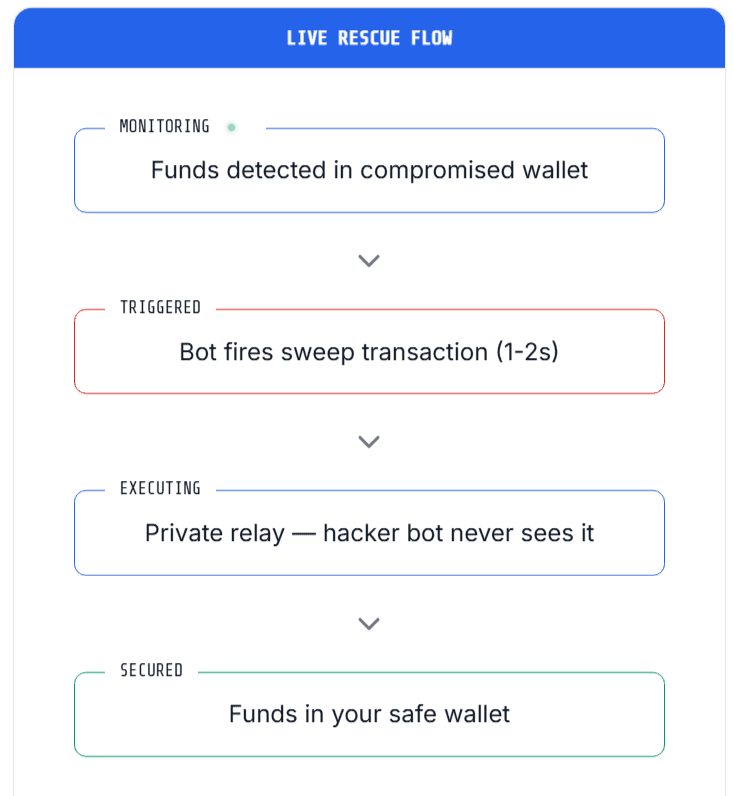
In traditional finance, detecting an unauthorized transaction might result in a frozen account and a reversed charge within a few business days. In decentralized finance (DeFi) and Web3, transactions are immutable and settle in milliseconds.
For enterprises and startups managing significant digital assets, this speed presents a dual-edged sword. While it enables incredible capital efficiency, it also means that operational risks—such as mismanaged infrastructure or compromised environments—can lead to instant, unrecoverable losses.
Many founders believe that 'being careful' with their keys is enough. But what happens when you have assets locked in staking protocols that continuously stream rewards to an environment that has become operationally risky? You can't just 'turn off' a smart contract. This is where manual intervention fails, and Blockchain Automation becomes mandatory.
TL;DR - Why Automation is Mandatory
- 1Manual transaction signing cannot compete with algorithmic network monitoring.
- 2Staking rewards create an ongoing attack vector if operations are compromised.
- 3Automated mempool listeners can secure incoming funds in sub-second intervals.
- 4True Web3 security requires bridging enterprise infrastructure (Node.js/Next.js) with blockchain protocols.
Root Causes
The Speed Mismatch
Human reaction time cannot compete with software. If you are trying to manually monitor a blockchain explorer to secure incoming funds, you will always be outpaced by automated scripts that scan the mempool 24/7.
A human takes 30 seconds to click 'transfer' on MetaMask. An automated Node.js script calculates gas and signs the transaction in 50 milliseconds.Continuous Yield Vulnerability
In DeFi, you don't just hold assets; your assets generate yield (staking rewards, airdrops, liquidity pool fees). If your operational environment becomes insecure, every new token that drops into your wallet is immediately vulnerable.
Gas Wars and Mempool Visibility
Submitting a transaction to the public mempool allows anyone to see your intent before it is finalized. Without automated, dynamic gas pricing (like utilizing Flashbots or MEV relays), your manual transaction might stall while someone else pays a higher fee to process theirs first.
Step-by-Step Fix Guide
Implement Continuous RPC Monitoring
To protect assets, you must know they exist the millisecond they hit the blockchain. This requires persistent WebSocket connections to enterprise-grade RPC nodes (like Alchemy or Infura).
Automation systems don't refresh web pages; they listen to raw EVM event logs and trigger callbacks the moment a 'Transfer' event is detected.Build a Decoupled Execution Engine
Security demands isolation. Your monitoring system should have zero permissions. When an event is detected, it should securely signal a completely separate 'Execution Engine' that calculates gas and signs the recovery transaction.
By decoupling the 'listener' from the 'signer', you ensure that even if your monitoring server drops, your secure assets remain untouched.Utilize Dynamic Gas Strategies
When seconds matter, you cannot afford a stalled transaction. Automation platforms programmatically analyze current network congestion and inject the precise Priority Fee required to guarantee inclusion in the very next block.
Secure Your Web3 Operations
Don't leave your digital assets to chance. OsmouTech builds mission-critical blockchain automation systems, secure smart contracts, and Web3 infrastructure for enterprises.
Visit ReclaimProtocolRelated Errors
Prevention Strategy
- Stop relying on consumer wallets (like MetaMask) for high-stakes enterprise operations.
- Invest in custom Node.js/Ethers.js backend infrastructure that actively listens to the protocols you interact with.
- Treat blockchain engineering like high-frequency trading—speed and automation are your best defenses.
Still Stuck With This Issue?
Send your exact error message or deployment issue. I'll respond with a targeted fix.
Need a Deeper Fix?
Describe your full project issue below and I'll get back to you with a targeted fix.